
1. Capture demand
Capture every signal.
Bring WhatsApp conversations, images, and voice-note context into one shared workspace so the team stops depending on memory, inbox clutter, and scattered tools.
Google Analytics 4
In your region we need your permission before enabling Google Analytics 4. This choice controls GA4 on this browser only. You can change it later from Cookie settings.
How OliviaFlow Works
From the first WhatsApp message to the next approved follow-up, OliviaFlow helps real estate teams decide what matters now, what should stay warm for later, and which properties fit the demand in front of them.
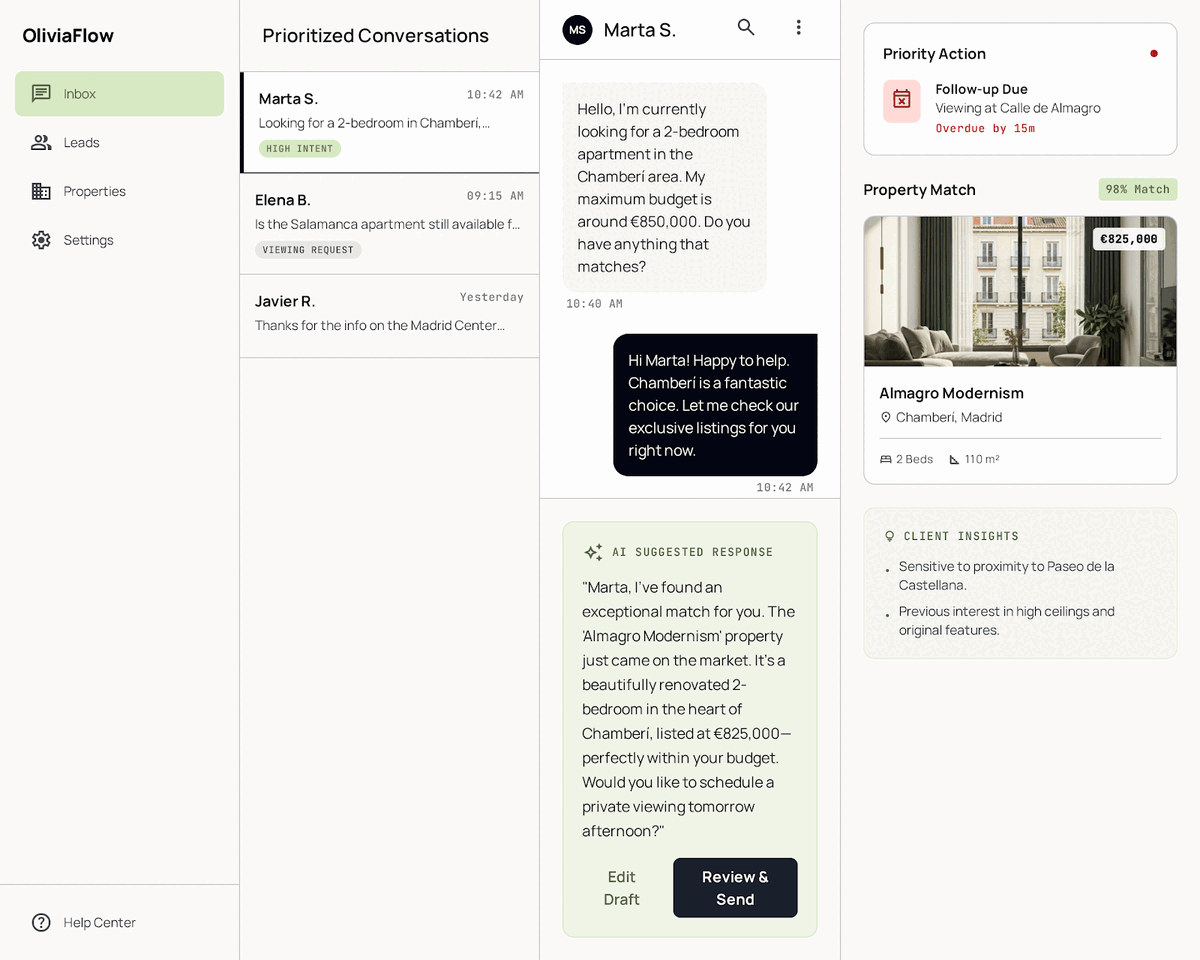
The workflow
OliviaFlow is built around the daily decisions that determine whether a lead moves, stalls, or disappears.
1. Capture demand
Bring WhatsApp conversations, images, and voice-note context into one shared workspace so the team stops depending on memory, inbox clutter, and scattered tools.
2. Prioritize action
Surface hot leads, follow-up due, and relevant property matches so agents focus on the conversations most likely to move today instead of reacting to whoever wrote last.
3. Follow through
Draft replies, confirm the next step, and keep future-fit leads warm without turning the workflow into blind automation or generic campaign software.
What the team gets
OliviaFlow is built for teams that already have demand and need a calmer, more disciplined way to convert it into replies, viewings, and future opportunities.
Know which leads need attention now and which ones should be protected for later instead of treated the same way.
Ground suggested responses in relevant inventory instead of generic drafting or memory-based replies.
Keep viewings, reminders, and next actions visible before good leads go cold or disappear into the inbox.
Outbound stays reviewable and human-approved, which keeps trust, judgment, and quality inside the team.
Early access
If your team lives in WhatsApp and wants a calmer way to prioritize, follow up, and protect future opportunities, request early access.
Requests are reviewed manually while early access stays intentionally limited.